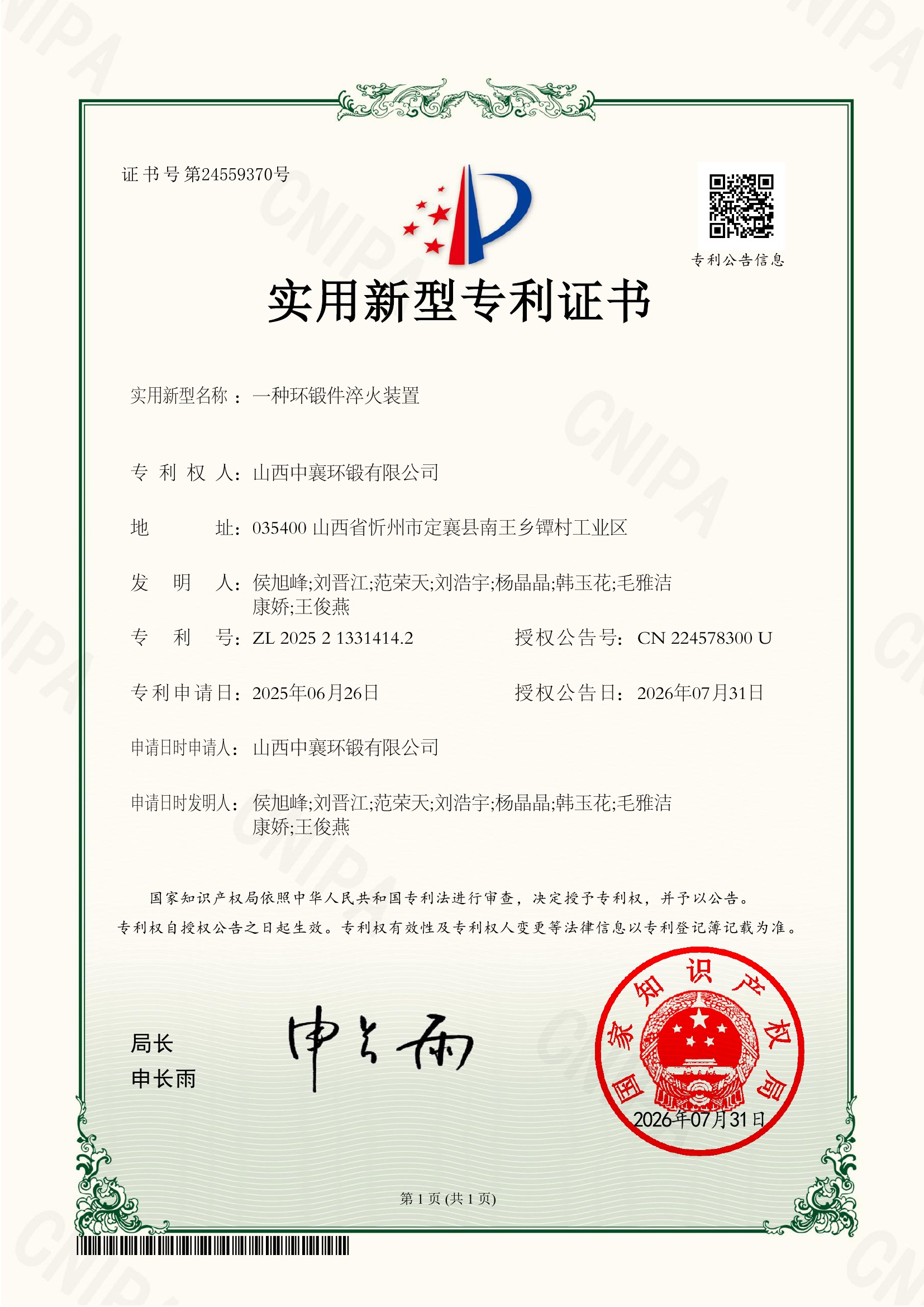
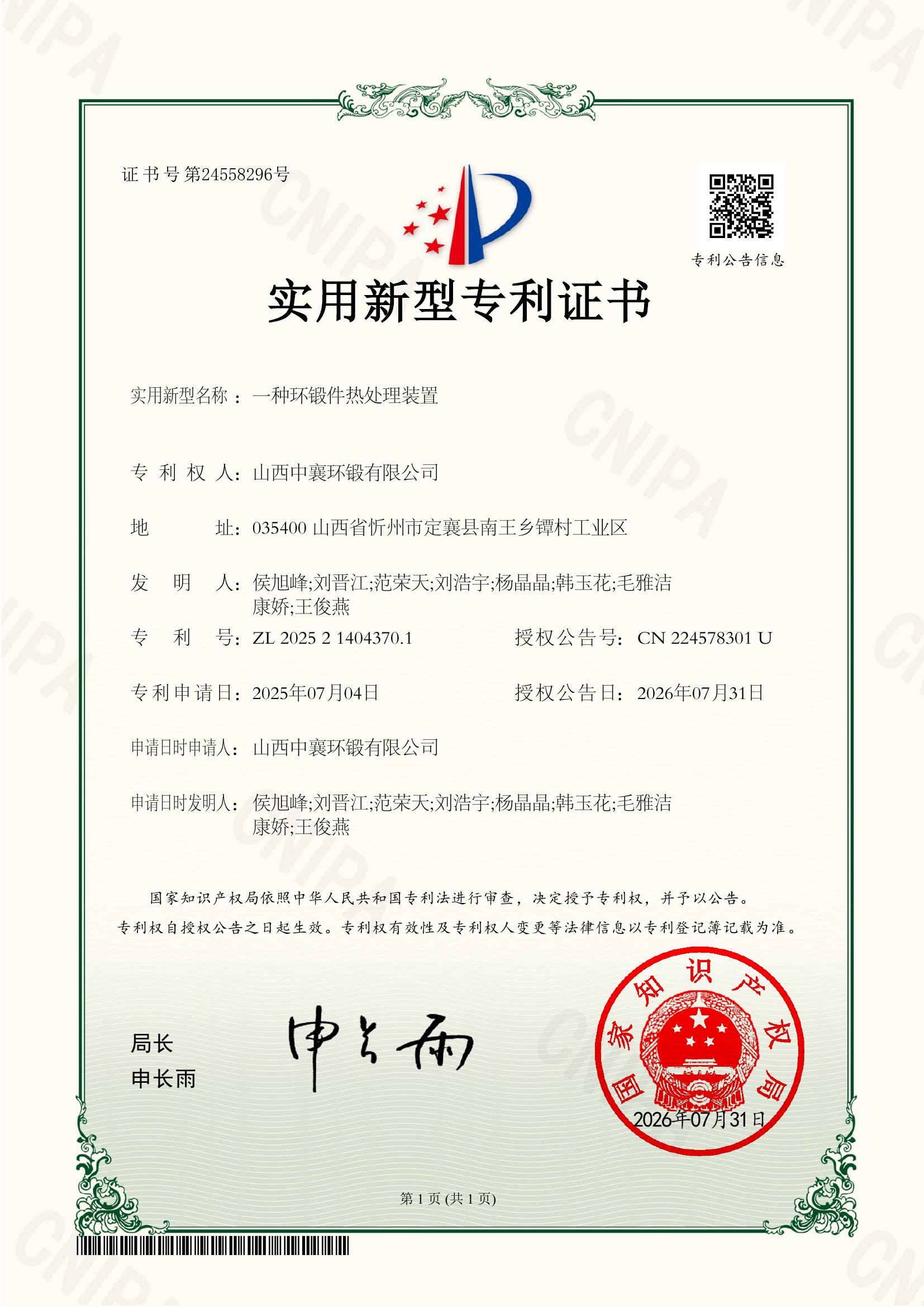
Track record
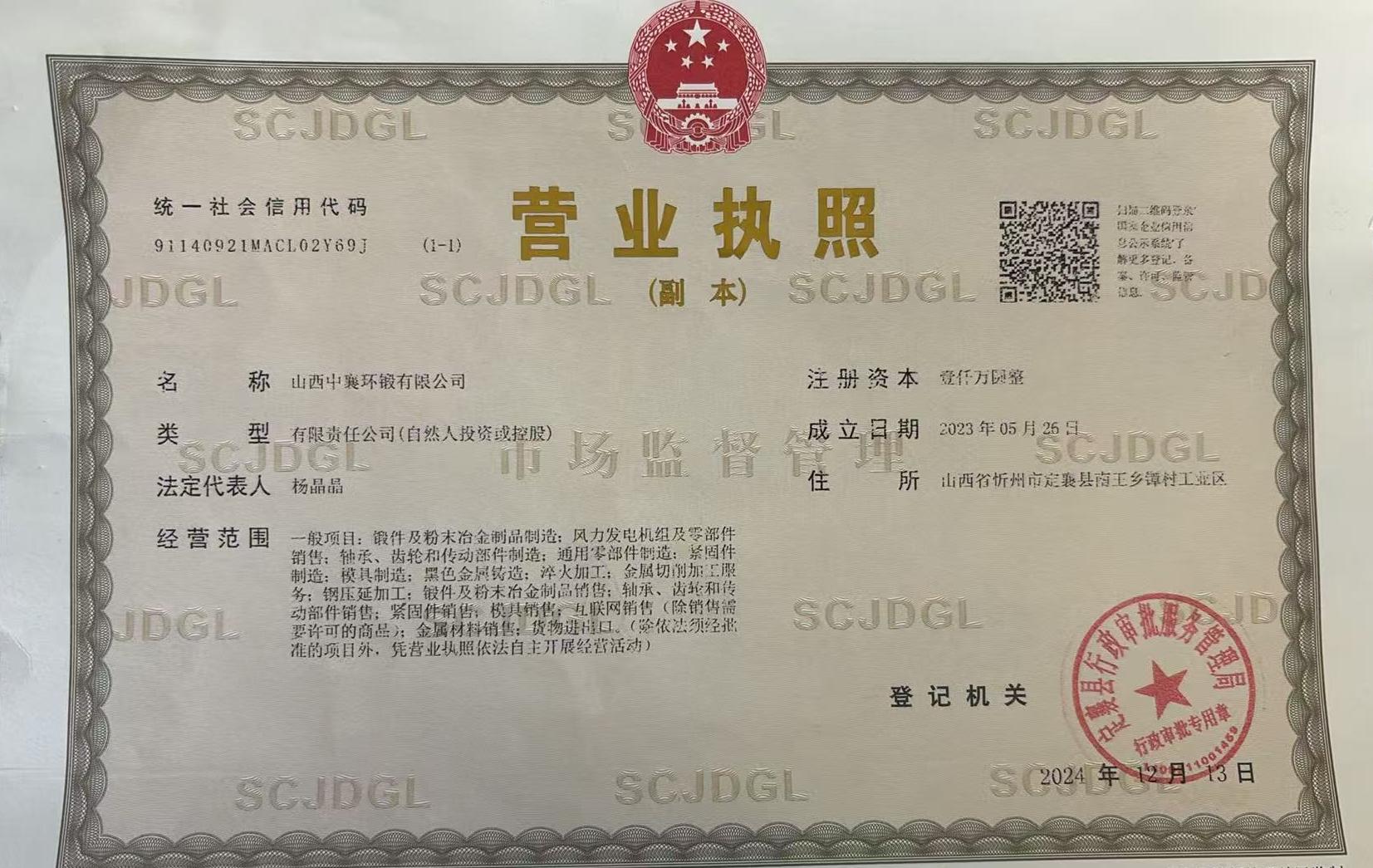
The company was registered in Dingxiang in May 2023. Dingxiang's forging capacity used to be fragmented: one shop had a hammer, another a ring-rolling mill, a third did heat treatment only — and to get a single finished ring, a buyer often had to travel between three or four workshops. That is exactly why we set up the company: to assemble the casting and forging, heat treatment and finishing capabilities into one line around a specific order. The customer deals with one person; we handle the operations in between. Orders came one after another, and over a few years we established ourselves firmly in the industry.
The equipment was gathered piece by piece: one 5-tonne, one 10-tonne and one 25-tonne hammer; three hydraulic presses at 4,000, 5,000 and 8,000 tonnes; one D53 ring-rolling mill each at 2, 5 and 8 metres; more than ten large CNC vertical lathes from 4 to 8 metres; pit-type furnaces for hardening, normalising and annealing at 3, 6 and 8 metres; plus more than 50 units of supporting machining equipment. Inspection is fully equipped and annual capacity reaches 60,000 tonnes. On raw material we work long-term with the Shanxi Taigang, Laiwu Steel and Chengde Jianlong mills and the Dingxiang finishing centre.
We mainly produce large rings, shaft-type forgings, gears and hydraulic cylinders in carbon, alloy and stainless steel, for wind power, chemicals, pressure vessels, water plants, coal mines, construction machinery and shipbuilding. Ring diameter up to 8 metres; single forging weight up to 40 tonnes.
How we work
Cost comes down by shortening the chain. Dingxiang has the full industrial base, only it is spread across individual shops. What we do is consolidate it: bringing together the strengths of the steel-casting, forging, heat-treatment and finish-machining plants, each contributing what it does best. That brings operating costs down substantially — on the same drawing we cover a wider range and have more room on price. The goal is simple: to deliver products and service beyond what the customer expects.
People are an asset, not a cost. The relationship between company and employee today goes well beyond a contract: what happens to the company affects every individual, and the reverse is true too. So the channel is open — management talks with staff regularly, one-to-one and in groups: pace of work, where things are stuck, what support is needed. Targets are set jointly, aligned with the company's direction, and everyone knows exactly what their part is.
Certainty in how results are shared. The company gives rewards and promotions based on actual performance, with several separate incentive schemes so that people share in the company's growth. We also look after health and work-life balance through more flexible scheduling and welfare measures that cut unnecessary pressure. Keep the people and the craft, and delivery dates hold.